
Peak Merch: On Merch and Memory
Explaining the raison d'être of my merch-focused travel channel, “Peak Merch”

Subscribe to Peak Merch on YouTube.
It had been four days of no weather as if nature had conceded its genius to the indoors.
They’d closed down the Bureau of Sad Endings and my wife sat on the couch and read the paper out loud.
The evening edition carried the magic death of a child backlit by a construction site sunrise on its front page.
I kept my back to her and fingered the items on the mantle.
Souvenirs only reminded you of buying them.
~ David Berman, “Governors on Sominex”, 1999
My music journalism career went comatose, for better or worse, in 2019. David Berman, the poet and songwriter behind the Silver Jews’ artful Americana, died by suicide that August, soon after releasing his final album under the Purple Mountains monicker.
By the time I wrote Berman’s obit for “No Depression”, any ambulance-chasing efforts of trying to make a career as an arts journalist had long been abandoned. Meritocracy in art was always romantic but seldom real. And after the consolidation of music by behavioral marketing company Spotify, the streaming wars and other media monopoly mishegas, the romance had ended. The scant few staff arts journalism jobs left were gatekept by privilege and nepotism, with preference going to the children of those who could be trusted to faithfully translate an integrated marketing narrative engineered for cross-demographic message pull-through and vetted by legal.
In the years prior, my writing about music and art eventually gave way to writing about media criticism, which in turn gave way to writing about media consolidation. Having firmly established a career in B2B service journalism for communications and PR professionals, I understood the transactional exchange of access through a more cynical, but also more pragmatic lens.
A year later, the pandemic seemed to exacerbate the gulf of privilege in many ways and shrink it in others. Death came for not only those at risk without the resources or ability to shelter, but also for those without the desire to. We all took some wild leap, be in a sourdough starter or leaving a family to move across the country. When things started reopening, and the precariousness of a subway made owning a car in Brooklyn seem reasonable for the first time, I decided to visit amusement and theme parks.
Though some historic trolley parks still exist, so named for their strategic placement at the ends of commuter lines to goose family travel traffic on weekends, the majority of them are no longer accessible in urban centers. Coney Island is a trolley park still accessible by subway, but Connecticut’s Lake Compounce, Pittsburgh’s Kennywood and others require other means of transport. Having a car made them all accessible.
Growing up in Florida normalizes a kid to the more aggravating stimuli of theme parks like heat, lines, price gouging and the hologram of a real experience.
In the months of reopening, with social distancing and mask mandates still in place, lines were no longer a concern and the real world made the hologram more appealing. It should be noted that the only difference between Disney Adults and Phish fans is the tolerance for psychoactive substances. Both demos have stepped into an alternate reality because the real day-to-day can get rough.
In the year that followed, as more parks opened up and attendance started to increase, I developed an appreciation for the merchandise commemorating this awkward time— a device for opening bathroom doors without touching them, branded with a cheap Six Flags sticker, or a face mask commemorating the 150th Anniversary of Cedar Point on Lake Erie.
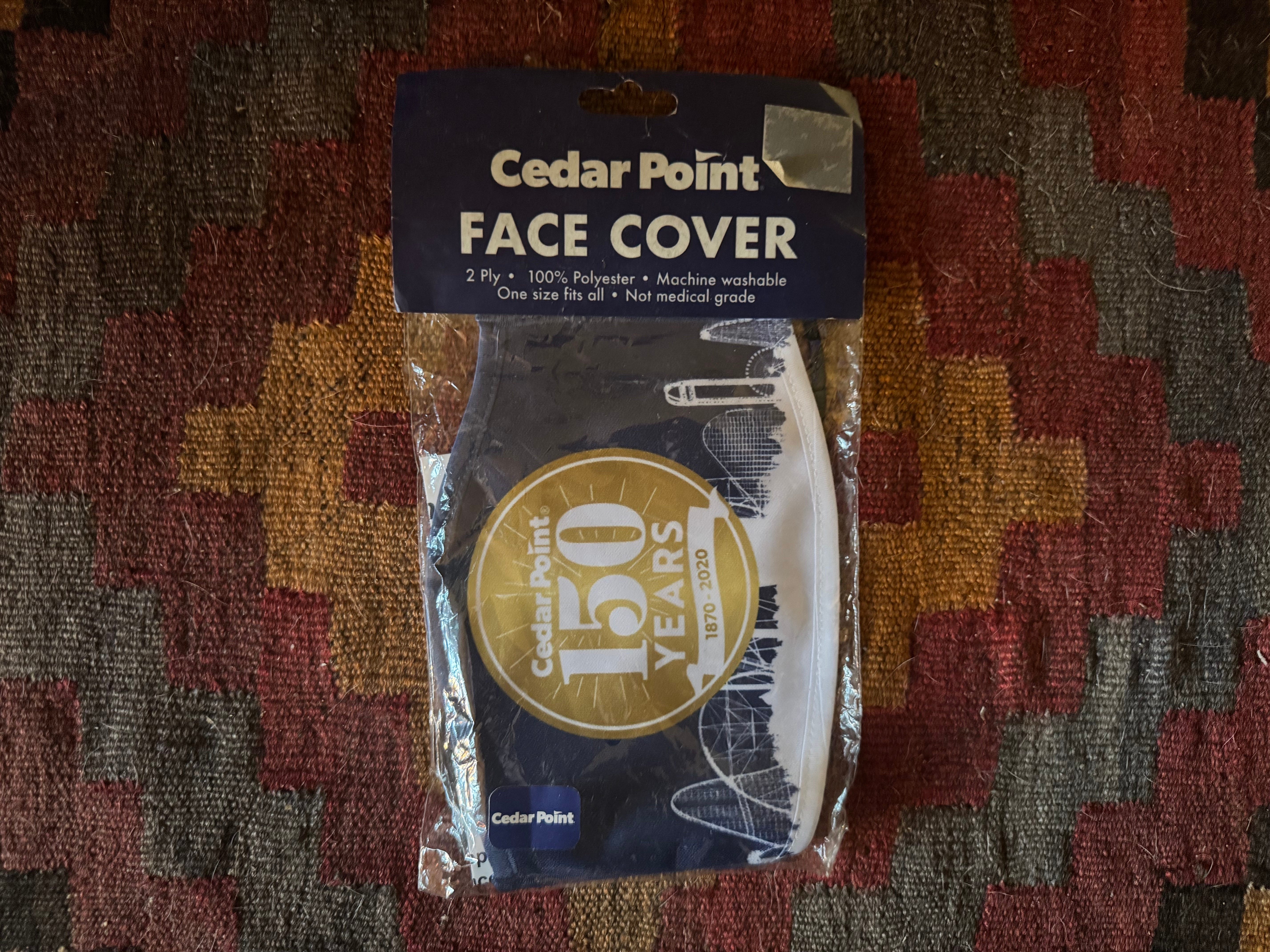
Indeed, as Berman wrote over two decades prior in his 1999 poetry collection “Actual Air”, souvenirs only reminded you of buying them. But connected to that memory of transaction was also a memory of relation. Where were you when you bought the thing? What was happening? And to what degree was the hologram punctured by the real—the shallow spectacle upended by the morbidly mundane? This fascinated me.
Brain rot crept in during 2020 and 2021, too, as it did for so many others. This introduced several YouTubers into my media diet, and their dumb channels, too—but theme park bloggers held a special place. Confined to a Bushwick railroad, one could bear witness to a Florida mouthbreather breathing freely against the advice of the scientific and medical community. The voyeurism was laced with danger and schadenfreude, but also envy and longing. These destinations were reachable, these itineraries attainable. These narrators were also unreliable.
And they never spent enough time the gift shop. The service journalist in me saw an opportunity wasted.
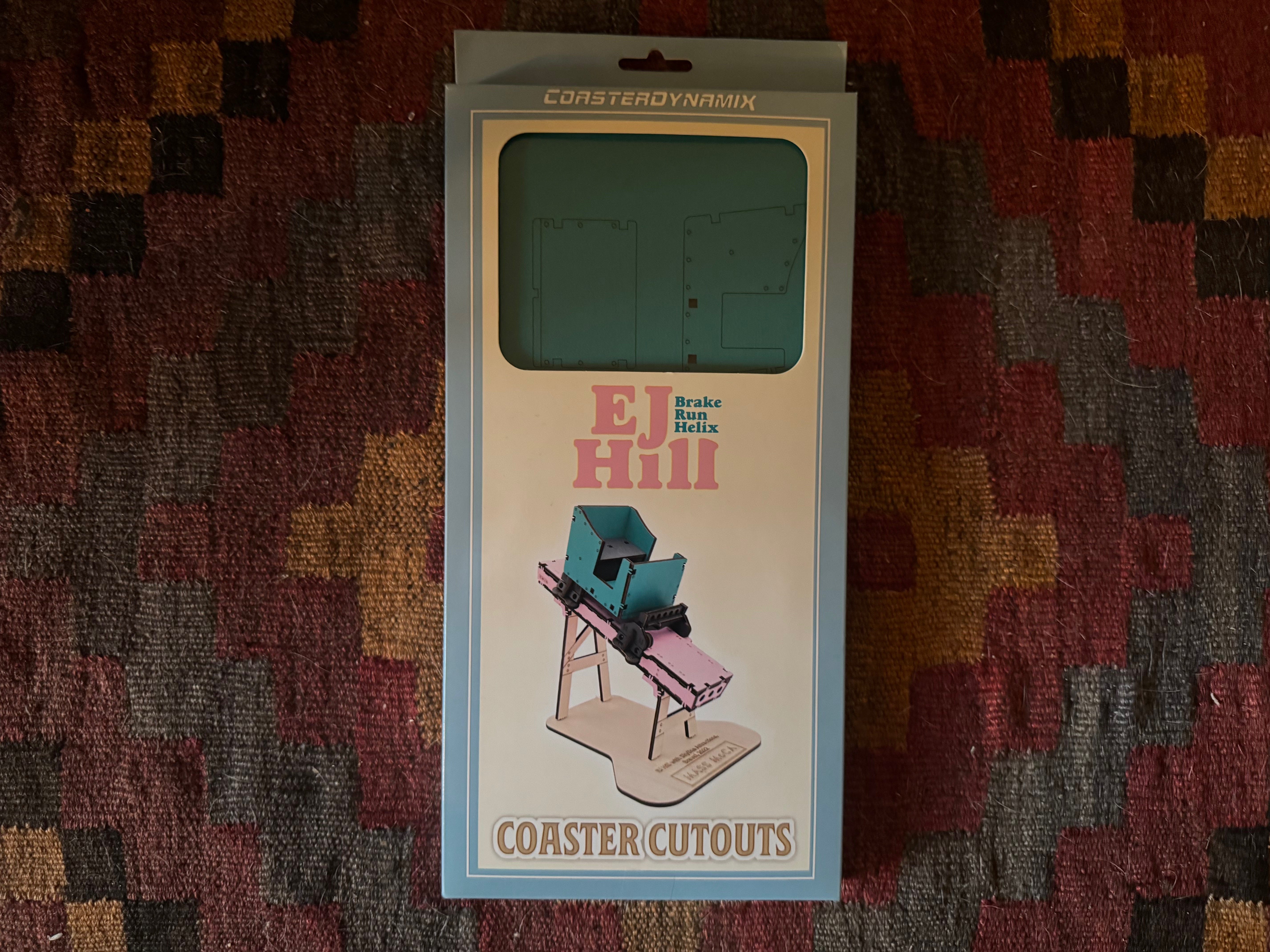
While I knew I could bring an added focus to this beat, I wasn’t yet sure about an added layer of depth. But when the artist E.J. Hill partnered with Skyline Attractions to build a roller coaster at the contemporary art institution Mass MoCA in 2022, I saw a glimmer of how the art and artifice of the amusement industry could coexist. Hill’s exhibition, “Brake Run Helix”, illuminated the beauty of roller coasters as shared spaces of communal joy and fear, anxiety alongside amusement. Hill said that class dissolves when everyone rides one together (up for debate with steadily increasing luxury offerings at major Universal and Disney theme parks). The experience was liberating for Hill not just because of the thrill of the ride, but the choreographed expression of our shared humanity.
And in the Mass MoCA gift shop, a special type of 3-D printed coaster cutout model, replicas designed to be assembled at home with no tools required, materialized.
By the time “Brake Run Helix” closed in Feb. 2024, I’d already decided to start my own merch channel on YouTube I had the DLSR, and a mic wouldn’t be too expensive. I’d capture all the context and narration as I filmed, a real slice of truth in the cinéma vérité, style, so as to document quickly and establish a sustainable cadence for publishing alongside my day job. That day job required a ton of travel for work, and I’d steal away whenever possible to pop into a tacky gift shop, visit a giant roadside convenience store and its litigation-happy beaver mascot, or crawl a theme park looking for exclusive vinyl score by Danny Elfman to accompany a land themed to the Universal Classic Monsters.
I’ve published a new episode of Peak Merch every Tuesday since May, 2024 and don’t plan on stopping. The tech has gotten better- a pro-blogger DJI Osmo camera with its built in gimbal stabilizes my image and makes it easier to capture on the go, while the accompanying app lets me upload each week without the need of a computer. The b-story of each video has gotten deeper too as my spieling has grown more confident, providing education and context on what I’m looking at. It’s part love letter and part satire, poking fun at the shallowness and cheap landfill dreck of collector culture while staying alert for the times when it also says something more profound and larger about what we choose to remember.
Entering through the gift shop grants a different perspective than exiting through it. This year has already brought me to the Art Deco, stone crab and beachside resort gift shops of Miami Beach. It’s called me to the old and problematic annals of central Florida sloganeering. It’s compelled me to revisit Montreal through a merch lens (Québec’s license plates do read, “je me souviens”, after all). The opening weeks of Universal Orlando’s Epic Universe Theme Park became a hunt for in-park exclusives, while a Bay Area jaunt took me through a redwood forest, Alcatraz, a historic beach boardwalk and two landmarks so designated for the mysteries contained therein.
This week, I share our trip to the Hudson Valley Garlic Festival where the official merch, for lack of a better word, stinks.
Each Tuesday, I’ll publish a short accompanying text here to put the adventure in context. The following day, I’ll share a piece on art and/or media.
I reckon that there’s a need for more loose articles about tight tchotchkes these days. And that’s why I truly believe in Peak Merch.